
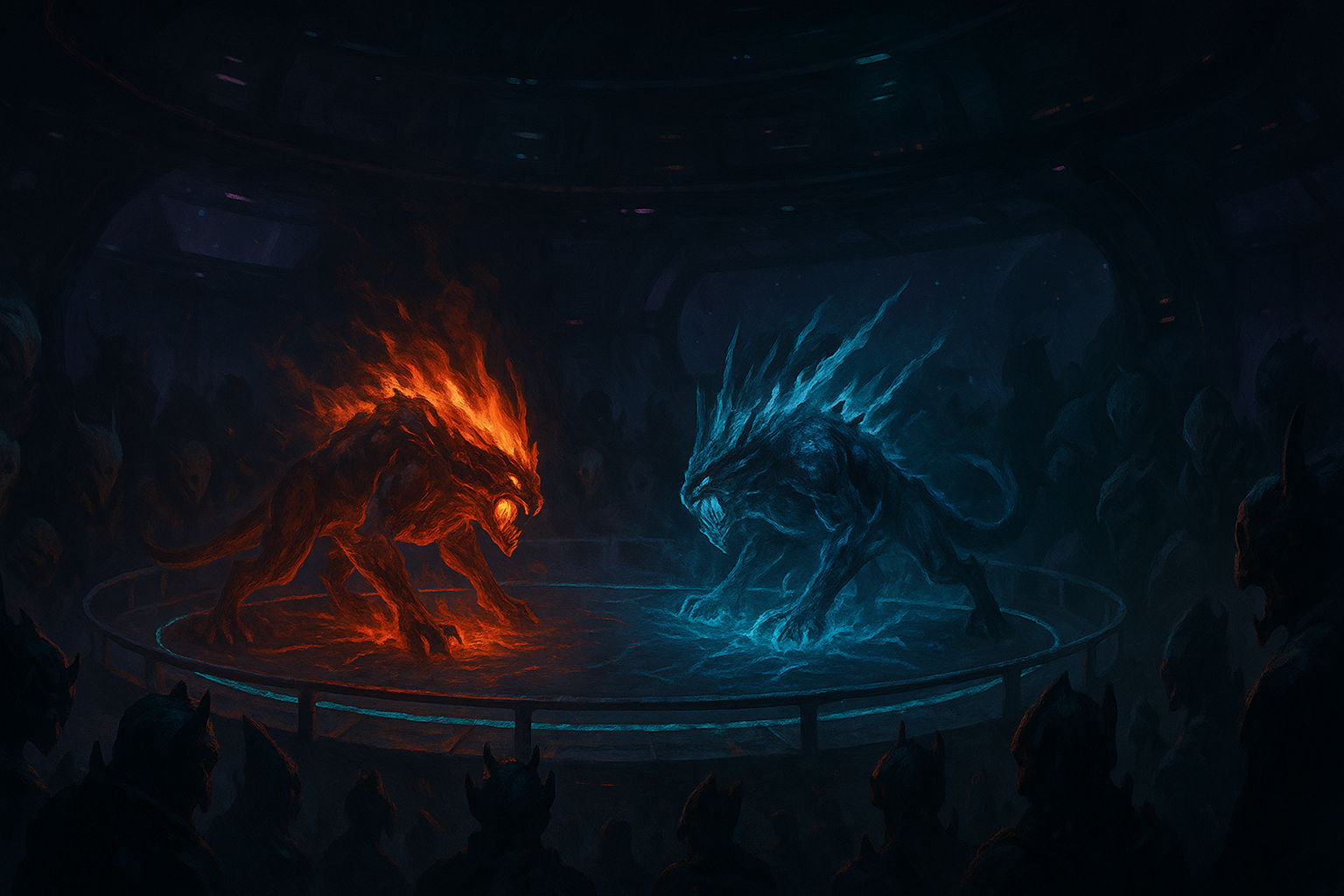
The Xeno Arena update (version 6.3, April 8, 2026) added a full turn-based creature battle system to No Man’s Sky. To get started, adopt at least one creature companion, then find any Holo-Arena table and interact with it to queue your first fight. Affinities, evolution, breeding, and ranked leagues all come later.
Step 1: Adopt some creatures
You can’t enter a battle without companions registered to your roster. To adopt a creature:
- Find fauna on any planet
- Feed it Creature Pellets to tame it (unlocked automatically after completing the Awakenings questline)
- Register it as a companion once tamed
Robotic fauna are the exception. They need an Ion Battery instead of Creature Pellets. Keep a few in your inventory if you want to recruit mechanical types.
Battles use teams of three, so you want at least three companions before queuing up. A bigger roster lets you swap in the right creature for each matchup, and once you understand affinities you’ll want to do that constantly.
Use Creature Survey Mode first
Before you adopt anything, switch your Analysis Visor to Creature Survey Mode (added in 6.3). It shows each creature’s potential battle traits and species data in the field, so you know what you’re getting before you spend a slot on it. It’s especially handy when you’re hunting for a specific affinity.
Companion slots
The Xeno Arena update raised the maximum companion limit from 18 to 30. You start with two slots unlocked. The third slot costs 500 Nanites, and each one after that costs more. Unlock them early. You can’t cover many affinities with two creatures.
Step 2: Find Iteration: Oceanus at the Space Anomaly
Before jumping into random fights, go to the Space Anomaly and find Iteration: Oceanus. This NPC runs a short tutorial battle that teaches the basics. Beating Oceanus also gives you your first Retroviral Pellet, which you need to evolve your creatures, so don’t skip it.
After the tutorial, Oceanus points you to two more battles. Completing all three fully unlocks the battle system and opens up player-vs-player fights.
Step 3: Learn the affinity system
If you learn one thing about Xeno Arena, learn this. Every creature has an affinity, an elemental type based on the biome it evolved in. The right affinity against an opponent deals bonus damage. The wrong one puts you at a serious disadvantage.
There are eight affinities in total. From the official patch notes: “Fire-based companions may excel against frozen creatures, but find themselves vulnerable to radioactive attacks.” The full matchup chart below comes from community testing:
| Affinity | Strong against | Weak against |
|---|---|---|
| Fire | Frost | Radioactive |
| Frost | Desert | Fire |
| Radioactive | Fire | Toxic |
| Toxic | Tropical | Mechanical |
| Tropical | Anomalous | Toxic |
| Anomalous | Mechanical | Desert |
| Mechanical | Toxic | Anomalous |
| Desert | Radioactive | Frost |
People are still mapping out every interaction. These matchups show up consistently, but not every edge case is documented yet.
There are two separate four-way cycles. One: Fire > Frost > Desert > Radioactive > Fire. The other: Toxic > Tropical > Anomalous > Mechanical > Toxic. Cross-chain matchups are less predictable, so early on, stick to the confirmed counters.
Before each fight, inspect the opposing team’s affinities. Swapping in one better-matched creature often turns a slow grind into an easy win.
Step 4: Find a Holo-Arena and fight
All battles happen at Holo-Arena tables, and they’re all over the galaxy.
| Location | Opponent | Difficulty |
|---|---|---|
| Space Anomaly | Other players (PvP) | Varies |
| Space stations | Seasoned system champions | Harder, better rewards |
| Planetary outposts | Local alien NPCs | Standard |
| Planetary archive buildings | Local alien NPCs | Standard |
| Some settlement buildings | Local alien NPCs | Standard |
For your first fights, stick to planetary outposts. Space station champions hit harder and should be tackled once you have a few evolutions done.
How battles work
Battles are turn-based. Your team of three faces an opponent’s team of three. Knock out all three of their creatures to win. Each creature acts in turn order based on its Agility stat. Faster creatures go first, and that matters more than you’d think.
Moves include direct attacks, heals, stuns, shields, status effects, and morphs that temporarily change an opponent’s affinity mid-fight. Creatures can also dodge attacks, score critical hits, and occasionally perform bonus moves. Cooldown management and matchup awareness matter more than raw damage output.
Step 5: Evolve your creatures
Winning battles earns your companions experience. As XP builds, they unlock genetic mutations through the Morphogenetics system. Mutations upgrade three stats. Agility controls turn order, and acting first is often worth more than raw damage. Health is how much punishment they can take. Combat Effectiveness scales how hard their moves hit.
Retroviral Pellets speed this up. Each one triggers an evolution right away, so you can apply gene mutations without grinding battles for XP. You earn them by winning battles once the system is fully unlocked.
One important detail: summon your creature first before feeding it a Retroviral Pellet. If you feed the pellet without summoning, you risk wasting it on the wrong creature. You get one from Oceanus at the start, and you won’t see another one immediately.
Upgrades are tier-based. You must complete one tier of mutations before the next unlocks. Plan your evolution path before you spend pellets.
Creature rating and long-term potential
Creatures come in S, A, B, and C class ratings, which set their stat ceiling. An S-class creature will ultimately outperform a C-class one at max evolution, even if the C-class starts with better numbers in some stats. From what players have found so far, upgrades can’t fully make up for a weak base rating.
That said, for early-game content, rating matters less than affinity coverage. A B-class creature with the right elemental matchup will beat an S-class creature on the wrong type every time.
Size also factors in. Larger creatures tend to be tankier but slower and easier to target. Smaller creatures dodge more often and act faster. That pushes you toward team roles, with big creatures up front absorbing hits and smaller ones in the back dealing damage.
Arena League: ranks and rewards
The Arena League is the progression faction for Xeno Arena, tracked in your Catalogue & Guide. It has five tiers of ranked medals. As you climb, you unlock:
- Nanites, earned from every battle (useful for companion slot unlocks and general progression)
- Retroviral Pellets, the main upgrade resource
- NPC invitations, which open access to tougher alien opponents with better rewards
- Titles for exceptional Arena League accomplishments
- Unique companions from Oceanus: Corrupted Quadruped, Geno-Prawn, Wandering Shrimp Tank, Boundary Horror, and Aeron Crab
Pin any Arena League medal from your Catalogue to activate step-by-step Mission Log guidance for reaching that tier.
Daily challenges
Oceanus posts a daily challenge each day, the same battle for every player in the game. It’s deliberately hard, to get people comparing strategies. Once you can beat it, it’s a steady Nanite source.
Breeding with the Egg Sequencer
The Egg Sequencer aboard the Space Anomaly lets you breed and modify creature offspring. A creature’s personality influences how it behaves in battle, while physical traits like size affect durability and target priority. The Egg Sequencer can now also access eggs stored in your Freighter inventory.
Breeding is for later. As a beginner, focus on taming creatures with good affinity coverage and solid base ratings before worrying about offspring traits.
Before your first fight
Check the opposing team’s affinities before locking in your lineup. It takes five seconds and wins fights you’d otherwise lose.
Don’t use your first Retroviral Pellet immediately after beating Oceanus. You only get one to start, so decide which creature you’re investing in before spending it.
Practice at the Space Anomaly. It’s the easiest hub to reach, and Oceanus runs the daily challenges from there.
Agility tends to decide close fights. When two teams are evenly matched, the faster one usually wins.
Unlock companion slots early. Affinity coverage wins most fights, and you can’t cover much with two slots.
Sources
Related
Frequently Asked Questions
Adopt at least one creature companion by feeding it Creature Pellets (or an Ion Battery for mechanical creatures), then find a Holo-Arena table at any space station, planetary outpost, or the Space Anomaly and interact with it to start a battle.
Fire, Frost, Radioactive, Toxic, Tropical, Anomalous, Mechanical, and Desert. Each affinity has one type it's strong against and one it's weak to. Fire beats Frost but loses to Radioactive, for example.
Retroviral Pellets are used to trigger creature evolution, unlocking genetic mutations that improve a creature's agility, health, and combat effectiveness. Always summon your creature first before feeding it the pellet.
Holo-Arena tables are found at space stations, planetary outposts, planetary archive buildings, some settlement buildings, and aboard the Space Anomaly. The Space Anomaly is the best starting point, and it's where Iteration: Oceanus offers the tutorial battle.